
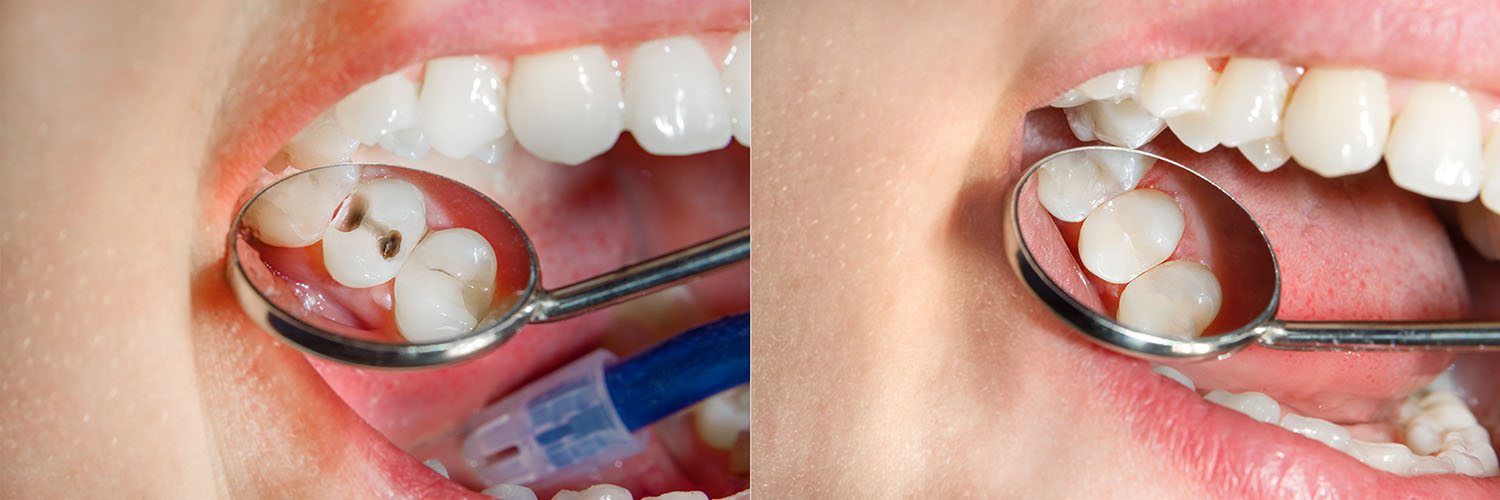
When a cavity or minor fracture weakens a tooth, a composite filling is a conservative way to rebuild form and function while keeping your smile looking natural. Composite restorations are crafted from tooth-colored resin materials that can be matched to your enamel, allowing repairs that blend in visually and restore chewing ability without the look of metal.
These restorations are designed to bond directly to the remaining tooth structure, creating a secure interface that helps resist further damage. The adhesive qualities of modern composites allow us to preserve more healthy enamel and dentin during preparation, which supports the long-term strength of the tooth.
The approach we take emphasizes both durability and aesthetics. By combining proven materials with careful technique, the treatment restores bite comfort and appearance in a single visit for most patients. Gentle Breeze Family Dentistry uses contemporary materials and methods to keep repaired teeth functioning reliably for years.
Tooth-colored composites provide clear advantages for many patients. Because they are shade-matched to surrounding teeth, they deliver a discreet solution that’s ideal for visible areas of the mouth. Beyond cosmetic benefits, these materials are free of metal components, which appeals to patients who prefer restorations without metal.
Composite resin adheres to enamel and dentin, enabling a more conservative preparation than many traditional restorations. Less removal of healthy tooth structure not only preserves strength but also reduces the need for larger restorations down the line. The result is a repair that maintains the tooth’s natural contours and supports overall oral health.
Composites are versatile: they can repair small to moderate cavities, reshape worn or chipped teeth, and replace outdated silver fillings in many cases. Their longevity depends on factors such as bite forces, oral hygiene, and regular dental care, but when placed correctly and maintained, composites perform well for everyday use.

The process begins with a careful examination and diagnosis. If decay is found, the affected area is numbed with local anesthesia so the procedure is comfortable. For patients who experience anxiety, we can discuss sedation dentistry options to help you feel relaxed during treatment.
Once comfortably numb, the dentist gently removes decay and shapes the cavity to create an optimal surface for bonding. Because composites rely on adhesive techniques, the preparation is typically more conservative than with traditional crowns or large restorations. This approach helps preserve as much natural tooth as possible.
The composite resin is placed in layers. Each layer is contoured to restore the tooth’s anatomy and then cured with a special light to harden the material. Layering allows the clinician to build strength and match translucency, resulting in a restoration that looks and feels like natural tooth structure.
After the material is fully set, the restoration is carefully shaped and polished to ensure a smooth surface and proper bite alignment. Final adjustments are verified while you bite and speak, ensuring comfort and function before you leave the office—most fillings are completed in a single appointment.
Immediately after treatment you may experience temporary numbness from the local anesthetic; avoid chewing until sensation returns to prevent accidental bites to the lips or tongue. Mild sensitivity to hot or cold is common for a few days as the tooth adapts, but this typically subsides on its own.
Good daily oral hygiene—brushing twice, flossing daily, and using an antimicrobial mouthrinse if recommended—helps protect both the restored tooth and surrounding teeth. Avoiding excessive force on the repaired tooth, such as biting very hard foods or using teeth as tools, will also extend the life of the filling.
Regular dental checkups let your dentist monitor restorations and catch any early signs of wear or recurrent decay. Routine professional cleanings and examinations are an important part of preserving fillings and overall oral health; small adjustments or polishings can improve comfort and longevity when needed.

Our goal is to restore teeth in a way that looks natural, functions well, and safeguards your oral health for the long term. We explain each step so you know what to expect and can make informed decisions about your care.
Although composite fillings are an excellent option for many situations, there are times when a more extensive restoration is recommended. Large areas of decay, significant fracture, or previous restorations that have failed may require onlays, crowns, or other restorative solutions to fully protect the tooth and restore function.
In some cases, deeper decay can approach the nerve of the tooth and necessitate endodontic (root canal) treatment before a durable restoration is placed. Your dentist will assess structural integrity, bite forces, and long-term prognosis to recommend the most appropriate treatment path that balances preservation with strength.
Discussing all available options ensures a treatment plan tailored to your needs and priorities. The practice prioritizes conservative care when possible but will recommend stronger restorative solutions when they best protect your oral health and function. If you have concerns about a current filling or suspect a problem, evaluation sooner rather than later helps preserve tooth structure and avoid more complex treatment.
To summarize, modern composite fillings offer a conservative, aesthetic, and reliable way to repair teeth affected by decay or minor damage. If you’d like to learn more about whether tooth-colored restorations are right for you, please contact us for additional information or to schedule a consultation.
Composite dental fillings are tooth-colored restorations made from a resin material that can be shade-matched to surrounding enamel. They are designed to bond directly to the remaining tooth structure, allowing for a more conservative preparation than some traditional options. Because they are free of metal, composites provide a discreet repair that blends with adjacent teeth for improved aesthetics.
Composites are versatile and can be used to repair small to moderate cavities, chips, and worn areas of teeth. The material can be layered and sculpted to reproduce natural contours and translucency, which helps the restoration mimic real tooth structure. Proper placement and polishing contribute to a smooth surface that resists staining and supports oral function.
A filling is typically recommended when decay has been removed and there is enough healthy tooth structure remaining to support a direct restoration. Dentists assess the size, location and extent of decay as well as the tooth's structural integrity to determine whether a filling will restore function safely. In many cases, a composite filling is preferred for visible areas because it preserves tooth structure and offers a natural appearance.
If decay is extensive or the tooth has a large fracture, a filling may not provide adequate long-term protection and a more robust restoration, such as an onlay or crown, may be recommended. Your dentist will consider bite forces, the tooth's remaining strength and the long-term prognosis when advising on the best option. Early intervention with a filling often avoids more complex treatment later.
The procedure begins with a careful examination and local anesthesia to ensure patient comfort. The dentist removes decayed or damaged tissue and shapes the area to create an optimal bonding surface, using adhesives designed for composite restorations. Because composite relies on adhesion, the preparation is often more conservative than for traditional restorations.
The resin material is placed in layers, with each layer contoured and cured with a special light to achieve strength and proper anatomy. Layering also allows the dentist to match translucency and color for a lifelike result. Once the material is fully set, the restoration is shaped, polished and adjusted to ensure a comfortable bite and smooth finish.
A well-placed composite filling is intended to restore both the appearance and function of the tooth so it looks and feels natural. Shade-matching and careful contouring help the restoration blend with surrounding teeth, while polishing creates a smooth surface that resists plaque accumulation. Most patients notice only a subtle difference in the treated tooth once sensitivity from the procedure resolves.
Immediately after treatment, temporary numbness or mild sensitivity to hot and cold can occur as the tooth adjusts to the restoration. These sensations typically subside within a few days, but your dentist can recommend desensitizing techniques or materials if sensitivity persists. Regular follow-up exams ensure the filling is functioning properly and remains comfortable over time.
Composite fillings are durable and perform well for everyday chewing when placed properly and maintained with good oral hygiene. Factors that influence longevity include the size and location of the filling, individual bite forces, oral hygiene habits and regular dental care. Heavy grinding, frequent acidic exposure and poor hygiene can increase wear and the risk of recurrent decay around a restoration.
Routine dental checkups allow the dentist to monitor restorations for signs of wear or marginal breakdown and to address minor issues early. When necessary, small repairs or polishings can extend the useful life of a composite filling. Choosing an experienced clinician and following aftercare recommendations are important steps in maximizing durability.
Mild sensitivity after a filling is common and usually temporary as the tooth recovers from treatment and adjusts to the new restoration. Sensitivity may be felt with hot, cold or biting pressure and generally resolves within a few days to a few weeks. If sensitivity persists beyond that timeframe or becomes severe, the dentist will evaluate the tooth for issues such as high bite contacts, marginal gaps or deeper irritation.
There are effective ways to manage sensitivity, including topical desensitizing agents, adjusting the bite and recommending specific toothpaste for sensitivity. In rare cases where sensitivity indicates deeper nerve involvement, additional treatment such as endodontic therapy may be necessary. Timely communication with your dental team helps ensure appropriate follow-up care.
In many cases, old metal (amalgam) fillings can be replaced with composite restorations to improve aesthetics and conserve more natural tooth structure. The decision to replace an existing filling depends on factors such as the integrity of the remaining tooth, presence of recurrent decay, and overall function. Replacing a failed or deteriorating filling can help restore the tooth's appearance and reduce the risk of further damage.
Removal of an old filling requires careful technique to protect tooth structure and the underlying pulp. Your dentist will evaluate the tooth and discuss whether a direct composite restoration or a more extensive option like an onlay or crown is the best long-term solution. Replacing metal fillings for purely cosmetic reasons is an option when the tooth is otherwise healthy and adequately supported.
When a cavity or fracture is too large for a direct filling, onlays, inlays or crowns may be recommended to provide greater strength and coverage. These indirect restorations are fabricated from materials such as ceramic or composite and are bonded to the prepared tooth to restore form and function. In situations where decay approaches the pulp, root canal therapy followed by a durable restoration may be required to preserve the tooth.
Choosing the right alternative depends on the amount of remaining tooth structure, tooth position, occlusal forces and the desired aesthetic outcome. Your dentist will explain the pros and cons of each option and recommend a treatment that balances conservation with long-term protection. Early evaluation helps determine the simplest effective approach and can reduce the need for more invasive care.
Maintain excellent oral hygiene by brushing twice daily with a fluoride toothpaste and flossing once daily to minimize plaque and reduce the risk of recurrent decay around the filling. Avoid using your teeth as tools and limit habits that place excessive force on restorations, such as opening packages or biting very hard objects. Wearing a nightguard is advisable for patients who grind or clench, as this can place undue stress on fillings.
Schedule regular dental exams and professional cleanings so your dentist can monitor the restoration and address any early signs of wear. If you notice roughness, a change in bite or new sensitivity, contact your dental office promptly so evaluations and minor adjustments can be made. Proactive home care combined with routine professional monitoring helps extend the life of your restorations.
At Gentle Breeze Family Dentistry in Santa Rosa Beach, the team emphasizes patient comfort through careful anesthesia, clear explanations and optional sedation for those with dental anxiety. Modern isolation techniques and adhesive protocols are used to create a clean, dry working field that improves bonding and treatment outcomes. Digital imaging and intraoral cameras support precise diagnosis and allow patients to see their condition before treatment begins.
Infection control, up-to-date materials and gentle handling of tissues help minimize postoperative discomfort and promote predictable healing. The dentist will review aftercare instructions and schedule follow-up as needed to ensure the restoration is functioning well. Open communication about sensations or concerns after the procedure allows the team to respond quickly and keep your care on track.

Existing Patients:
New Patients:
